How to Write a Research Proposal: Step-by-Step Guide for Academic Success
In this guide, we explain the step-by-step stages of how to write a research proposal, from selecting a clear and focused topic to final submission. Each stage is designed to simplify the process, helping you stay organized, confident, and on track throughout your research journey.
Many scholars seek expert assistance because crafting a proposal can be challenging. Choosing the right methodology, conducting a thorough literature review, and presenting ideas clearly can often feel overwhelming. With the support of our experienced professionals, your proposal becomes academically strong, well-structured, and persuasive, increasing your chances of approval while saving valuable time.
If you are wondering why scholars choose our research and PhD assistance services, we will explore this in detail below
How to Prepare a Research Proposal Effectively
Understanding how to prepare a research proposal effectively is essential for building a strong academic foundation. While preparing a research proposal, the following points should be kept search proposal in mind to make the proposal academically sound:
- Maintain clarity and structure by organizing content logically.
- Conduct a thorough literature review to understand existing research.
- Identify research gaps to highlight the need for your study.
- Define clear objectives that are specific and measurable.
- Select appropriate research methods aligned with your goals.
By focusing on these points, scholars can develop a well-organized and academically strong research proposal.
Connect with an expert
Step-by-Step Process of How to Make a Research Proposal
Following a structured approach simplifies crafting a research proposal, ensuring clarity, feasibility, and academic excellence. These eight steps provide a comprehensive framework suitable for scholarly work like dissertations or journal submissions.
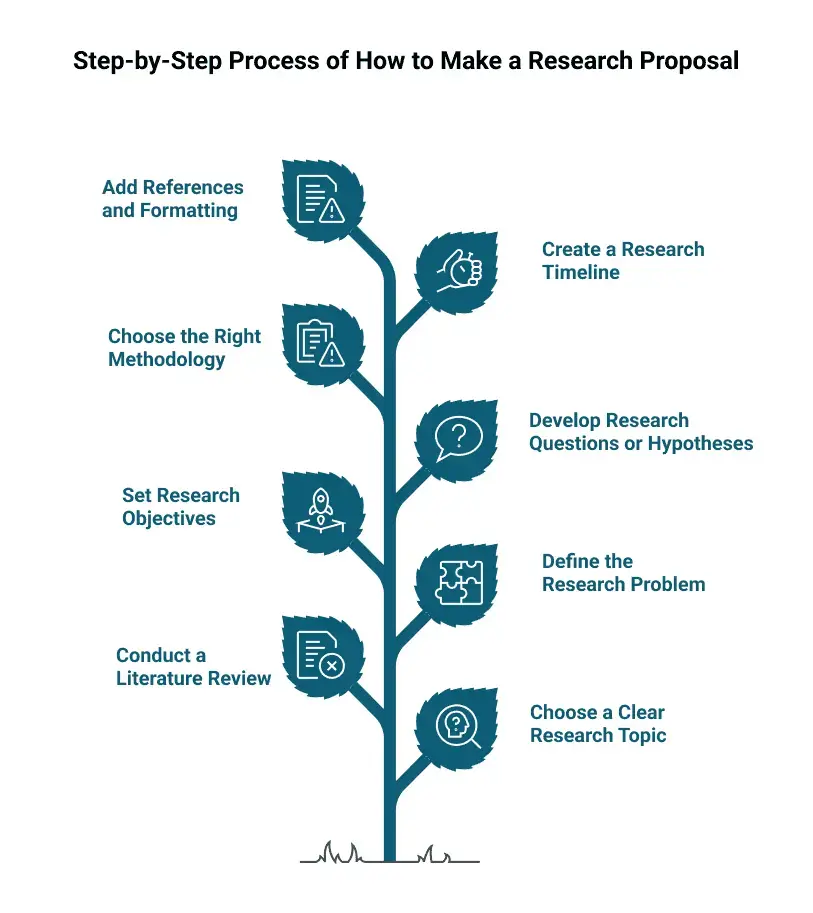
Step 1: Choose a Clear Research Topic
Selecting strong Research Topics is the foundation of how to make a research proposal. Focus on clarity, relevance and originality. A well-defined topic should address a specific issue aligned with your field and be feasible within your time and resource constraints.
Step 2: Conduct a Literature Review
A thorough Literature Review helps you understand existing research and identify gaps your study can address. It strengthens how to make a research proposal by providing context, avoiding duplication and showing how your work contributes to academic discussions.
Step 3: Define the Research Problem
Clearly stating the Research Problem is crucial in how to make a research proposal. It explains the issue your study addresses why it matters and its broader significance ensuring your proposal has purpose, direction and real-world or theoretical relevance.
Step 4: Set Research Objectives
Establishing precise research objectives guides your study’s direction. Objectives should be specific, measurable and achievable helping clarify what you aim to accomplish. This step ensures your proposal remains focused and aligned with the identified research problem.
Step 5: Develop Research Questions or Hypotheses
Formulating clear research questions or hypotheses is essential in shaping your study. These elements define what you seek to answer or test, providing a structured path for investigation and ensuring your research remains logically consistent and purpose-driven.
Step 6: Choose the Right Methodology
Selecting an appropriate Research Methodology determines how you will collect and analyze data. Whether qualitative quantitative or mixed methods your choice should align with your objectives and research questions to ensure reliability, validity and meaningful outcomes.
Step 7: Create a Research Timeline
A well-structured timeline outlines each phase of your research process. It helps manage time efficiently, track progress and ensure deadlines are met. This step adds practicality to your proposal and demonstrates your ability to execute the study effectively.
Step 8: Add References and Formatting
Proper referencing and formatting enhance the credibility of your proposal. Follow the required citation style consistently and organize your document professionally. This final step ensures your research proposal is polished academically sound and ready for evaluation.
Why Scholars Choose Our for Research Proposal Assistance
Many scholars struggle with developing a research proposal from selecting the right topic to organizing methodology and references. We simplify the process by breaking it into clear, structured steps, ensuring your proposal is professional, academically strong, and easy to follow. Here’s how we do it:
PhD-Qualified Experts
We work with experienced researchers and PhD-qualified experts who ensure every proposal is accurate, well-researched, and aligned with academic standards, delivering strong and credible submissions.
100% Customized Solutions
We deliver fully customized proposals tailored to your research goals, subject requirements, and university guidelines, ensuring uniqueness, relevance, and academic appropriateness in every submission.
Time-Saving & Efficient
Our streamlined processes and expert support enable efficient completion of research proposals, saving time while upholding quality, accuracy, and consistency throughout the writing process.
Premium Academic Quality
Every proposal is plagiarism-free, thoroughly researched, and professionally written to meet high academic standards, boosting approval chances and supporting overall academic success.
Structured and Clear Content
We produce proposals with clear structure, logical flow, and well-organized content, facilitating easy understanding and adherence to proper academic formatting standards.
End-to-End Assistance
From topic selection to final submission, we offer complete support at every stage for a smooth, stress-free research proposal process with expert guidance.
Conclusion
We have explained the steps of writing a research proposal, providing a solid foundation for your success. And yes, by following this series of steps—including selecting a research topic, conducting a literature review, clearly defining the research problem, and choosing the most appropriate methodology, you can create proposals that are clear, effective, and credible.
With our expert support, we help take your research proposals to the next level. We guide you through practical solutions, helping you prepare strong research proposals and build the confidence needed to succeed academically.
Frequently Asked Questions
Am I allowed to make changes to my research proposal?
Yes, you are allowed to make changes to your research proposal, but the changes must be in line with the academic guidelines.
How long is a research proposal?
Typically, a research proposal ranges from 1000 to 3000 words, depending on academic requirements and research complexity.
Will Ondezx help me increase the chances of approval for my research proposal?
Yes, Ondezx is here to help you increase the chances of approval for your research proposal.
Are the Ondezx experts PhD holders?
Yes, Ondezx experts are PhD holders and can assist you in creating quality content.




 By Emilia